The Shifting Holiday Playbook: Why Brands Are Pulling Back From Owned Channels in 2026

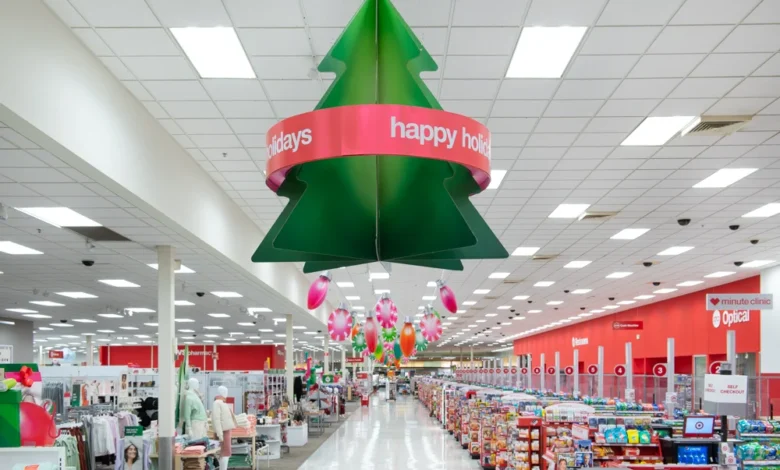
The retail landscape is undergoing a profound structural evolution as brands and marketers prepare for the 2026 holiday shopping season. According to a comprehensive industry survey recently published by Modern Retail, traditional retail strategies are losing ground to a more fragmented, platform-diversified approach. Despite acknowledging the undeniable importance of direct-to-consumer (DTC) touchpoints during peak retail periods, decision-makers are scaling back their active reliance on owned brick-and-mortar storefronts and proprietary e-commerce platforms compared to previous years.
This strategic retreat does not signal a total abandonment of owned channels; rather, it highlights a broader recalibration of how businesses allocate marketing budgets, manage customer acquisition costs, and navigate an increasingly non-linear consumer journey. As digital marketplaces consolidate power, social commerce platforms like TikTok Shop carve out dedicated spaces, and consumer behavior becomes increasingly erratic, brands are forced to rethink their entire holiday playbooks.
The Numbers Behind the Retreat: A Sharp Drop in Owned Channel Utilization
The Modern Retail survey data paints a striking picture of how drastically marketers are altering their execution plans for the upcoming holiday rush. When examining owned e-commerce sites—proprietary web domains owned and operated directly by brands—less than half of the survey respondents (46%) indicated that they plan to utilize these platforms during the 2026 holiday season. This represents a substantial decline from the 69% of respondents who stated they planned to leverage their own sites during the 2025 holidays.
A similar downward trajectory is evident within physical retail environments. Only 60% of survey respondents reported plans to utilize owned brick-and-mortar stores for the 2026 holidays, marking a significant drop from the 84% who reported the same intentions just a year prior.
Paradoxically, these cutbacks occur alongside a widespread recognition of the channels’ intrinsic value. When asked about overall performance, 67% of marketers maintained that owned physical stores grow increasingly important as sales channels during the high-stakes holiday season, while 49% expressed the same sentiment regarding owned e-commerce sites. This apparent contradiction—valuing a channel while simultaneously pulling back on active deployment—points to a complex cost-benefit analysis happening within corporate boardrooms. High customer acquisition costs, fierce competition for digital ad space, and shifting consumer habits are prompting brands to diversify rather than concentrate their bets.
The Evolution of the Consumer Journey and Omnichannel Fragmentation
To understand why brands are reducing their direct focus on owned spaces, industry experts point to the fundamental fragmentation of the modern path to purchase. Susan Grossman, executive vice president of consumer acquisition and engagement services at Mastercard, emphasizes that the traditional, predictable shopping funnel has effectively dissolved.
“Today’s holiday shopper might discover a product through a creator, compare options on a retailer’s site, read reviews, receive an offer in a banking app, and ultimately purchase somewhere else entirely,” Grossman explains. Because the modern consumer journey is increasingly non-linear and cross-platform, marketers are naturally adjusting their strategies. Rather than pouring capital into driving traffic to a single destination—such as an owned website—brands are investing heavily in creating cohesive, connected experiences that meet consumers wherever they happen to be browsing.
Despite this diversification, owned physical retail stores and proprietary e-commerce sites stubbornly retain their positions as the number one and number two most-used sales channels during the holiday season, respectively—a ranking they have successfully defended since 2024. Meanwhile, third-party brand stores and Amazon currently share the number three spot, underscoring the vital hybrid approach that modern merchants must adopt to capture market share.
Amazon’s Unyielding Digital Dominance and Market Consolidation
No discussion of modern retail strategy is complete without examining the towering presence of Amazon. The e-commerce giant continues to exert unmatched influence over the digital retail ecosystem. According to the Modern Retail data, 33% of brands and retailers plan to sell directly through Amazon during the 2026 holiday season. Furthermore, 38% of marketers explicitly state that Amazon grows more important to their sales volume during the holidays. Other digital marketplaces also maintain a strong foothold, with 29% of brands planning to utilize alternative online platforms and 26% noting their increasing importance during the fourth-quarter surge.
However, industry leaders caution that marketplace dominance does not translate to a universal prescription for success. Laura Brodie, chief growth officer at dietary supplement brand Ritual, notes that the efficacy of any given sales channel is largely tethered to a brand’s specific product purchase frequency.
“It depends almost entirely on purchase frequency,” Brodie explains. “If you’re thinking about low-frequency, one-time purchases, the shift toward marketplaces and retail makes a ton of sense because the digital foot traffic is already there. You don’t need to pay to drive consumers to the destination.”
Conversely, when purchase frequency is high, the financial calculus shifts dramatically. For brands that rely on repeat customers, the long-term value of retaining those relationships within an owned channel—thereby maximizing customer lifetime value (LTV)—can easily outweigh the steep upfront costs of customer acquisition. During the holiday season, when advertising and customer acquisition costs spike across nearly all digital channels, understanding this delicate trade-off is crucial for maintaining profitability.
The Rise of Social Commerce: TikTok Shop Enters the Mainstream
A notable milestone in the 2026 Modern Retail survey data is the inclusion of TikTok Shop as a standalone, tracked sales channel for the first time. The results immediately underscore the platform’s rising prominence in the social commerce arena. Approximately 21% of survey respondents confirmed that their companies plan to utilize TikTok Shop as an active sales channel during the 2026 holiday season, completely eclipsing other social commerce platforms, which pulled a mere 6% intent-to-use rating from marketers.
While the enthusiasm for TikTok Shop is palpable, industry veterans advise a measured, strategic approach to social commerce execution. Ari Bloom, founder and CEO of brand incubator A-Frame Brands, highlights the unique operational challenges that brands face when attempting to monetize social platforms that rely primarily on organic, creator-driven ecosystems rather than traditional transactional storefronts.
“TikTok Shop is going to be very content creator-heavy, and it’s harder for brands to do it unless they’re really good at working with those content creators,” Bloom warns. He points out that traditional brand-owned digital storefronts do not always translate seamlessly to the platform’s native architecture. “It’s hard for brand stores to do it on their own on TikTok. It’s not set up for it, and it’s not a platform that natively works well with established brands. Creator brands, on the other hand, are going to be fantastic there.”
Broader Industry Implications and the Fate of Wholesale
Beyond digital platforms and social commerce, the broader retail infrastructure is experiencing significant turbulence. Ari Bloom offers a stark assessment of the traditional wholesale environment, suggesting that the structural decline of multi-brand retail is inadvertently pushing brands to rethink their channel strategies.
“Brands take their own channels and especially physical stores for granted,” Bloom notes. “We see that repeatedly as the pendulum shifts back to controlled environments, but the reality is that wholesale channels are dying. Physical and multi-brand retail, except for mass, is going away. Very few department stores are healthy enough to survive this year, and a lot have gone out of business.”
This ongoing contraction of traditional department stores and regional retail chains forces brand executives to look closely at where they invest their capital. As wholesale doors close and customer acquisition costs on major search engines fluctuate, brands must master the art of omnichannel orchestration.
Conclusion: Navigating the 2026 Holiday Landscape
As the 2026 holiday shopping season approaches, the overarching narrative for brands and retailers is one of strategic adaptation. The decline in planned usage for owned e-commerce sites and physical stores should not be misinterpreted as a loss of confidence in direct-to-consumer models. Instead, it reflects a maturation of retail strategy—a realization that modern shoppers demand flexibility, discovery across disparate channels, and seamless cross-platform experiences.
Whether leaning into the massive digital foot traffic of Amazon, managing complex customer acquisition tradeoffs based on product purchase frequency, or navigating the creator-led dynamics of TikTok Shop, successful marketers in 2026 will be those who refuse to rely on outdated, monolithic playbooks. By balancing the long-term value of owned customer retention with the immediate reach of third-party marketplaces and social commerce, brands can position themselves to weather the complexities of the modern holiday rush and emerge resilient in an ever-shifting retail economy.
Related posts: